
Flashcards for Students and Teachers: Free AI Deck Maker
Flashcards for students and flashcards for teachers are the same tool used from two ends of the room. A student wants a deck for revision tonight, built from the notes they took this morning. A teacher wants a deck that matches the unit they just taught, printable, shareable, and still useful next term. VisualNote AI builds both from material you already have.
For students
The reason most people do not use flashcards is not that they doubt they work. It is that writing forty cards from a chapter takes longer than reading the chapter did. Removing that cost changes the maths: if the deck already exists, revision becomes the only thing left to do.
For teachers
A deck built from your own lesson material is worth more to a class than any ready-made set, because it tests the wording, the emphasis, and the examples you actually used. Building one used to be an evening of typing. Now it is one run, and the output leaves the site in whatever form your classroom needs.
Why flashcards work, in plain language
Re-reading feels productive and mostly is not
Read a page twice and the second pass feels easy. That ease is the trap. What you are sensing is familiarity with the words on the page, not the ability to produce the idea when nobody is showing it to you. An exam never hands you the text. It asks a question into an empty room. If every hour of your revision has been spent looking at answers, you have never once practised the thing the exam actually tests.
Active recall is the practice that counts
Active recall means pulling the answer out of your own head before you check it. It is uncomfortable, it is slower than reading, and it works far better. The effort of retrieval is what strengthens the memory, and the moment you fail a card you have found something worth spending time on. A flashcard is simply the smallest possible container for that: a question, a pause, then the answer.
This is also why a good card holds one idea. If a card asks three things at once, you can half-answer it and move on feeling fine. One idea per card, phrased so there is a single answer, means you either had it or you did not, and there is no room to fool yourself.
Spaced repetition beats cramming
Memories fade on a curve, and the useful trick is that each time you successfully retrieve something, the curve flattens. Six hours of revision the night before an exam mostly rebuilds the same shallow trace over and over. The same six hours split across three weeks, with gaps in between, leaves something that is still there a month later. The gap is not wasted time; the partial forgetting is what makes the next retrieval worth doing.
Four passes, spread out
Four passes, twenty minutes each. Roughly an hour and a half of real work per topic, spread over three weeks, and it beats an all-nighter by a distance.
An example deck: cell division
Six cards of the kind a unit on mitosis and meiosis produces. Each one tests a single comparison, which is what makes them useful for revision rather than just another summary.
Mitosis gives two daughter cells identical to the parent, each with the full chromosome number. Meiosis gives four cells, each with half the chromosome number and a different mix of genetic material.
Mitosis is one division after one round of DNA replication. Meiosis is two divisions after a single round of replication, which is why the chromosome number ends up halved.
Homologous chromosomes pair up and exchange segments. That is crossing over, and it reshuffles alleles before the cells separate.
Mitosis happens in body cells, for growth, repair, and replacement. Meiosis happens only in the cells that produce gametes: sperm and egg.
In mitosis, and again in metaphase II, individual chromosomes line up single file. In metaphase I of meiosis, homologous pairs line up side by side.
Crossing over in prophase I, and independent assortment: each homologous pair orients at the plate on its own, so the combination that ends up in a given gamete varies.
What one run produces
Each one opens the full visual and the notes the deck was written from.
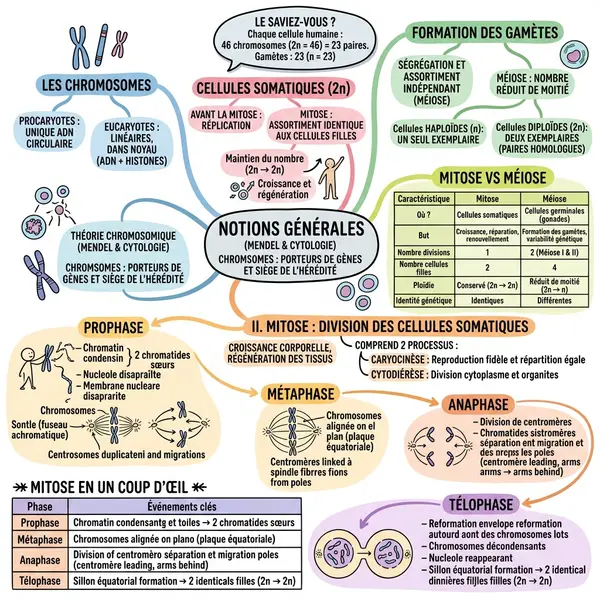 Mitosis vs meiosis
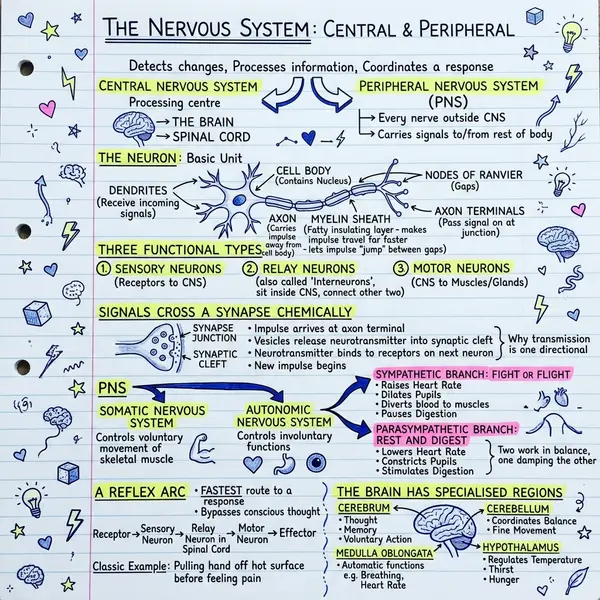 Nervous system
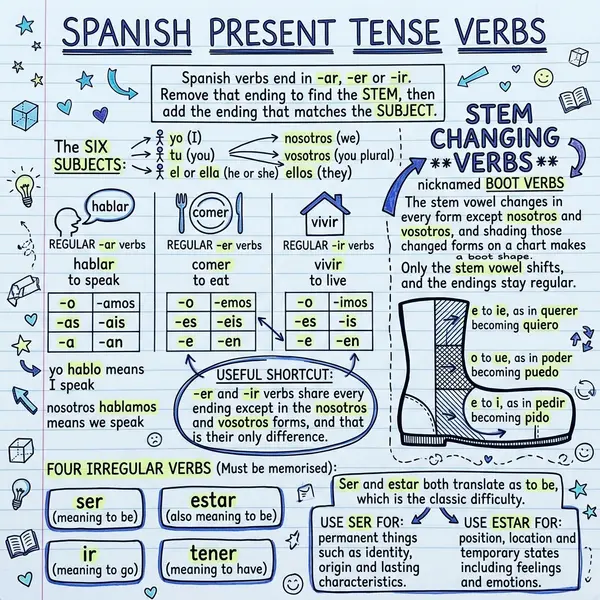 Spanish present tense
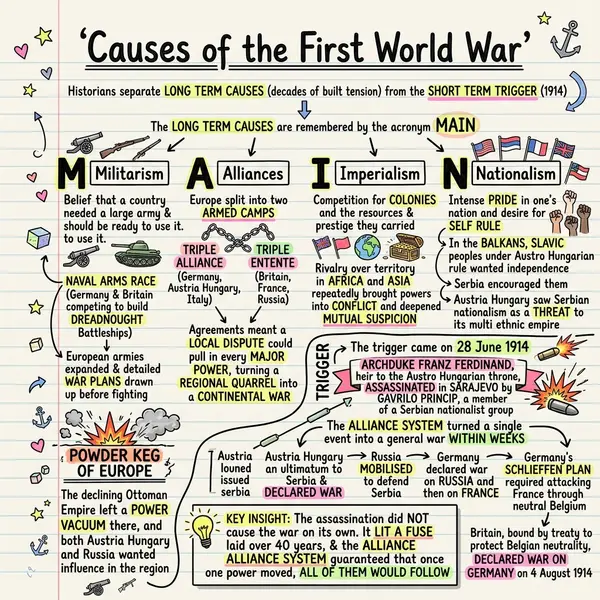 Causes of WWI
Questions students and teachers ask
Yes. New accounts start with free generations and no credit card is required, and a generation gives you the visual summary plus the flashcard deck built from the same source.
Yes. Paste the text of your notes, upload a PDF of the chapter or the slides, or drop in a YouTube link for a recorded lecture. The deck is written from whatever you provide.
Up to 30 cards. You can regenerate the deck if the questions miss the point, or append more cards to cover a section that was skipped.
Yes. Print the deck to PDF for a paper handout, or download the self-contained interactive page, which runs in any browser with no login and no internet connection.
A simple schedule that works is day 1, day 3, day 7, and day 21. Spread the passes out and spend most of your time on the cards you keep getting wrong.
Build a deck from your own material, free
One chapter, one set of notes, one lecture. You get the visual and the flashcards in the same run, with no credit card.