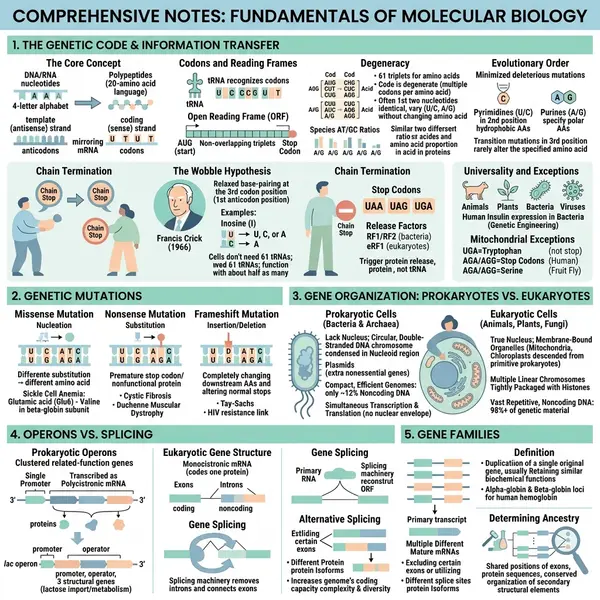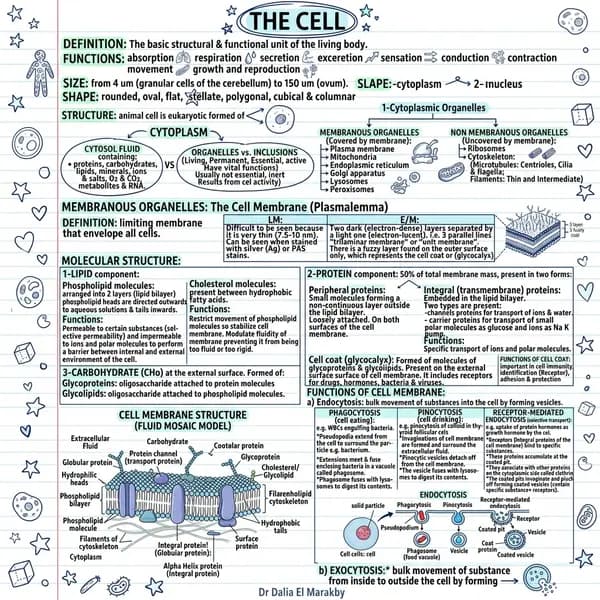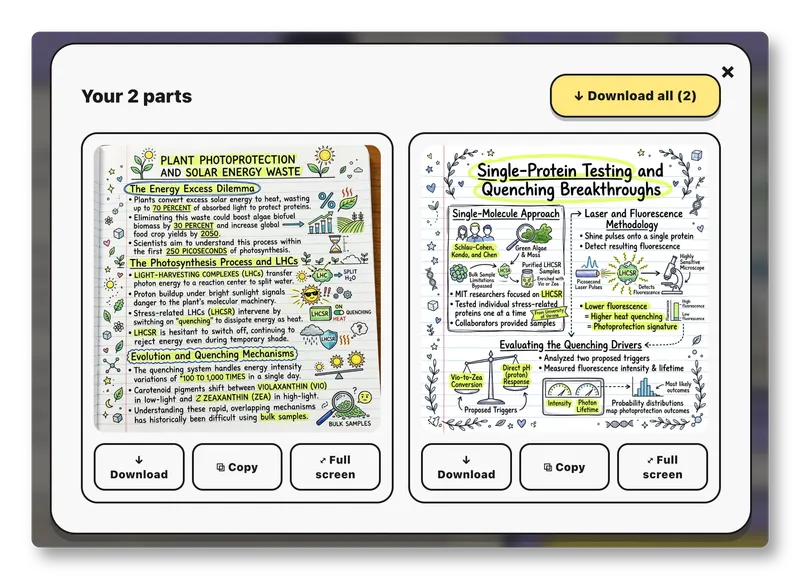
Ask two students how they revise and you tend to get two answers. One draws diagrams and mind maps and can explain the whole topic at a whiteboard, but blanks on the specific enzyme the exam asks about. The other has a thousand-card deck, knows every definition cold, and cannot say why any of it matters. Both are half right.
The fix is not to pick a side. It is to do them in order.
The two-pass method
Pass one: get the shape of the material
Before memorising anything, you need to know what you are looking at. Which ideas are the load-bearing ones, which are details hanging off them, and how do they connect. A one-page visual summary does this because the page is finite: everything important has to fit, and anything that fits has to sit somewhere in relation to everything else. Reading it takes a minute. You come away with a map.
Pass two: lock it in with retrieval
Understanding a topic and being able to produce its details on demand are separate skills, and only the second one is graded. That is the deck's job. Each card asks a question, you answer from memory before flipping, and the effort of retrieval is what turns a topic you followed into a topic you know.
Why the pairing works
Facts are easier to remember when they have somewhere to attach. Isolated cards are hard work precisely because each one is a free floating item with no context; you are memorising trivia. Run the visual pass first and every card lands on a hook you already built. When a card asks which sugar RNA uses, you are not retrieving a random word, you are retrieving one labelled corner of a diagram you have already seen.
The relationship runs the other way too. A visual summary alone lets you fool yourself: you look at it, everything seems clear, and you move on. Nothing has tested you. The deck removes that comfort by asking questions with the picture face down. When you miss a card, you have found an actual gap rather than a vague feeling that you should probably reread this bit.
A worked example: DNA and RNA
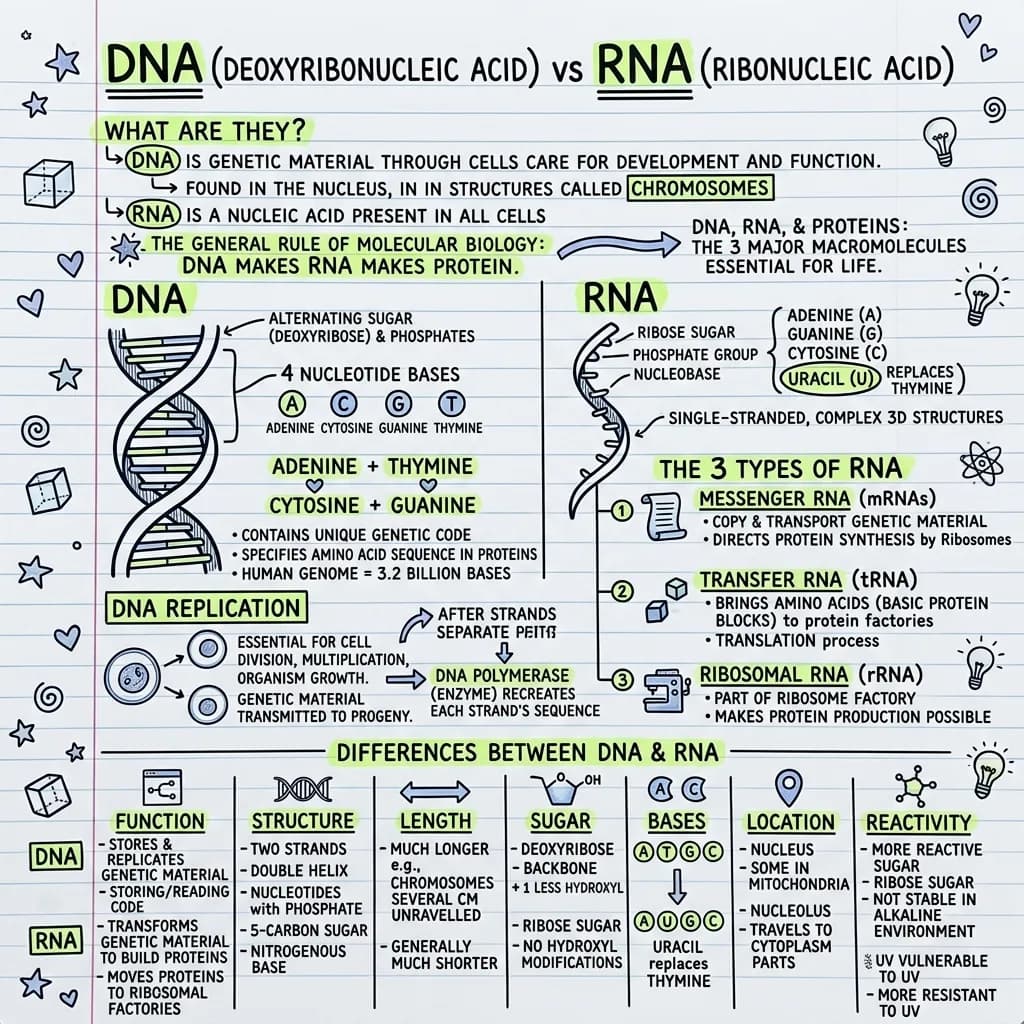
Take a molecular biology chapter comparing DNA and RNA, the source of the sketchnote at the top of this article. A visual summary of that material lays out the pieces you would otherwise be hunting for across eight pages: the double helix with its sugar-phosphate backbone running in opposite directions, the base pairing rules drawn as rungs, RNA shown as a single strand alongside it, the three RNA types with what each one does, and a comparison table pinning down the differences in sugar, bases, strandedness, and location.
Spend a minute with that and you know the territory. Now the deck makes you prove it. Cards you would drill from this material:
- Which sugar distinguishes RNA from DNA, and what is the structural difference? Ribose, which carries a hydroxyl group at the 2' carbon where DNA's deoxyribose has only hydrogen.
- RNA substitutes which base for thymine? Uracil, which pairs with adenine just as thymine does.
- What holds the two DNA strands together? Hydrogen bonds between paired bases: two between adenine and thymine, three between guanine and cytosine.
- What does transfer RNA do during translation? It carries a specific amino acid to the ribosome and matches its anticodon to the codon on the messenger strand.
- Why is DNA the long-term store and RNA the working copy? The double strand and the missing 2' hydroxyl make DNA chemically stable, while single-stranded RNA is more reactive and is made and degraded as needed.
Notice that none of these can be answered by recognising the shape of the words. Each asks for something you either can produce or cannot. The one about stability is the useful kind: it makes you connect two facts from different corners of the visual rather than recite one.
The workflow, start to finish
- Upload the chapter PDF, paste your lecture notes, or drop in a link. One source produces both outputs, so you are not preparing the material twice.
- Read the visual summary once, slowly. This is pass one. Do not try to memorise anything yet; you are building the map.
- Generate the flashcard deck from the same source. It caps at 30 cards, which is deliberate: a deck you can finish in one sitting is a deck you will actually review.
- Read the cards before you drill them. Regenerate if the deck missed the point of the chapter, or append more cards if it covered the right ground but left out a section you know will be examined.
- Practice in the flip view. Answer out loud or on paper before you flip; thinking “yes I know that one” and flipping is re-reading with extra steps.
- Come back on day 3, day 7, and day 21. Keep the visual open beside the deck on those later passes so that anything you miss goes straight back onto its hook.
Every deck downloads four ways: a PDF through your browser's print dialog, a CSV that imports into Anki or opens in Excel and Sheets, a plain text file, and a self-contained interactive page that works offline with no login. Pick whichever fits how you revise. The AI flashcard generator page walks through the deck side in more detail, and you can see the visual and the deck sitting together in the flashcards section on the homepage.
Two passes per topic. The first one takes a minute, the second takes fifteen, and between them they replace the evening you were going to spend reading the chapter again.