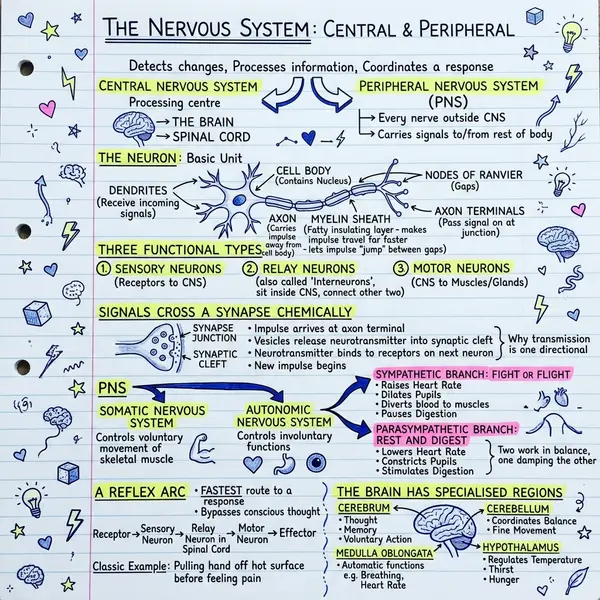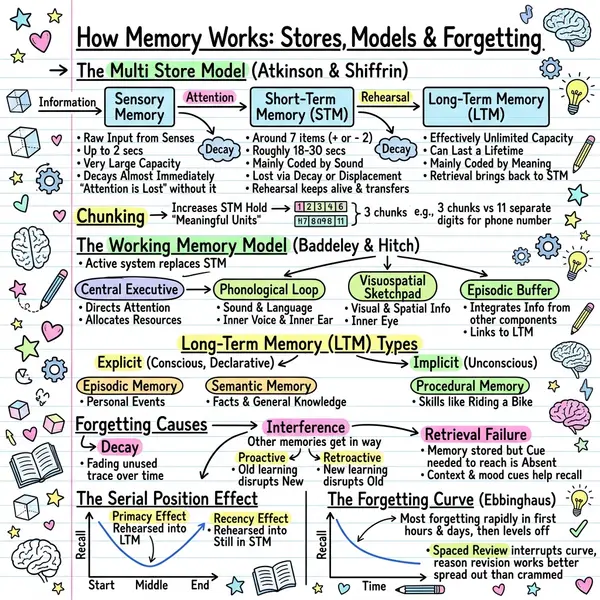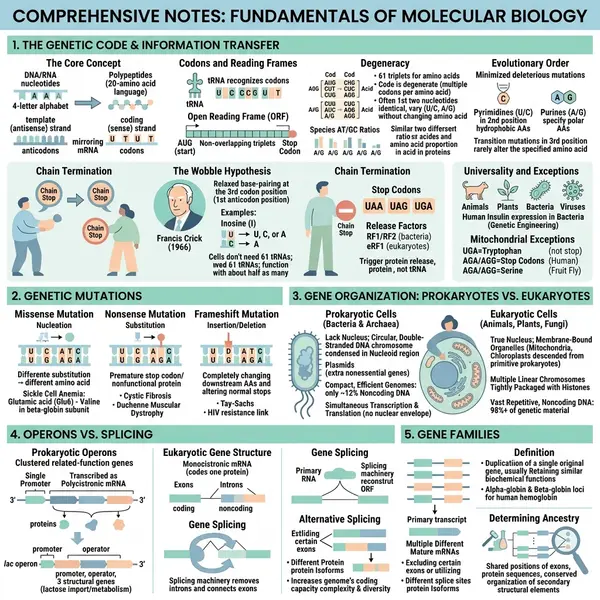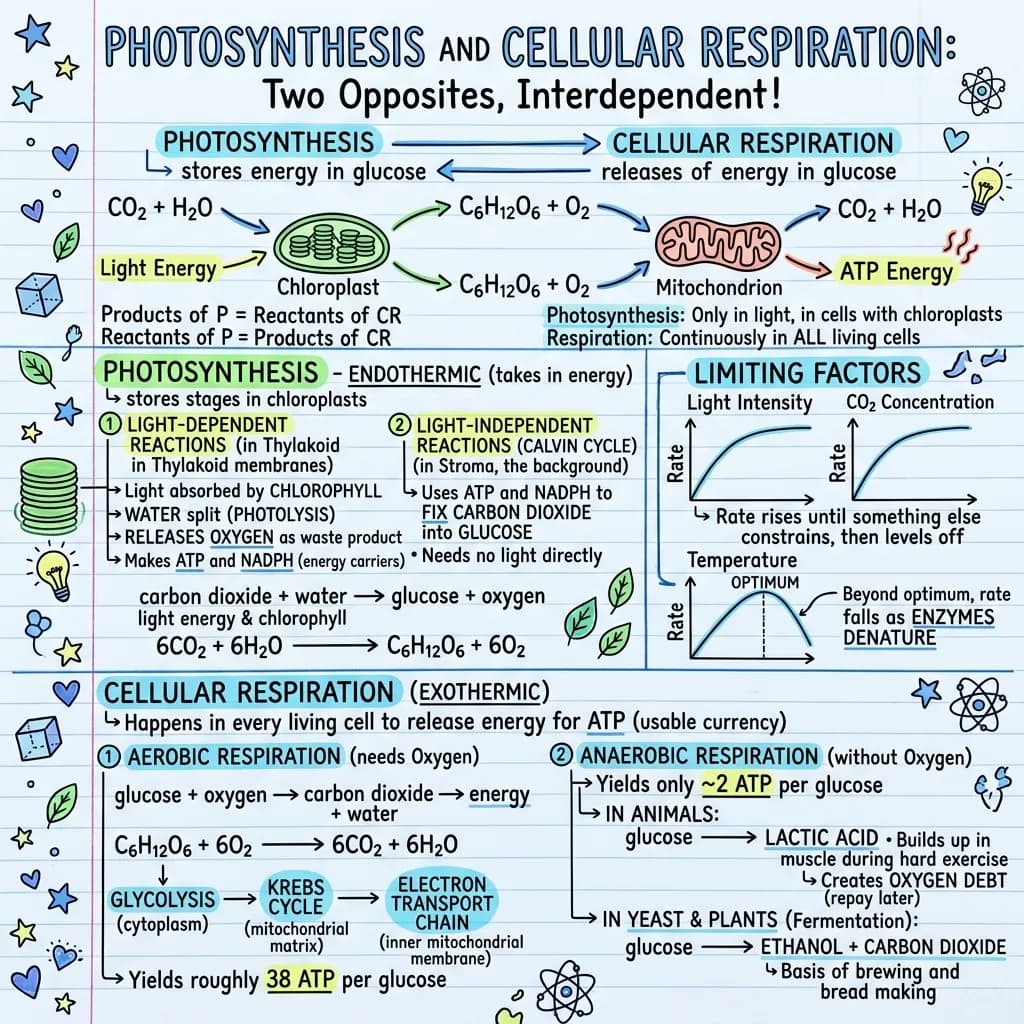
Most articles on sketchnoting quote a number like "55% better retention". We looked for the source of that figure and found no peer-reviewed study behind it, so you will not see it here. What does exist is a solid body of research on drawing as a learning strategy, one small classroom study on sketchnoting itself, and a few results that cut the other way.
The case for: drawing builds stronger memories
The best known work comes from the University of Waterloo. Across seven experiments, Wammes, Meade and Fernandes (2016) found that words people drew were recalled better than words they wrote out. The advantage survived shorter study time and longer lists, and it was not explained by deeper processing or mental imagery alone. Their 2018 review extends this to pictures and textbook definitions, and proposes why: drawing forces you to combine a meaning, a picture and a hand movement into one memory.
The closest study to real revision is Schmeck and colleagues (2014). German 8th graders read a science text about influenza. Those who drew each paragraph as they read scored higher on comprehension than those who only read: d = 0.85 in the first experiment (48 students) and d = 0.52 in the second (164 students). Two details matter. The students were given drawing support, a prompt and a set of elements to use. And the accuracy of a student's drawing predicted their score.
The case against: when drawing did nothing, or hurt
Leutner, Leopold and Sumfleth (2009) gave 111 10th graders a dense chemistry text. Students told to draw on paper, with no support, reported higher mental load and understood less (d = -0.37). Students who only imagined the content did better (d = 0.72).
Lawson and Mayer (2024) tested undergraduates on an online lesson that already had pictures. Writing summaries beat the control group, right away and a week later. Drawing did not. And Mykoniatis, Smith and Drake (2025) found no recall difference between drawing, paraphrasing and copying scientific definitions in 91 participants; drawing ability and prior familiarity predicted recall instead.
Fiorella and Zhang (2018) reviewed this whole literature and landed on a fair summary: drawing can help with science texts, but it is slow and mentally expensive, students often draw badly without guidance, and the result depends on what you compare it with.
So, is it effective for revision?
Putting the eight studies together:
- It works best for structure. Processes, cycles, comparisons and cause and effect chains. The benefit comes from deciding what connects to what.
- Support decides the outcome. The same activity went from d = -0.37 to d = 0.85 when students got scaffolding. Staring at a blank page with a dense chapter is the failure case.
- It costs time. If drawing a page takes the whole evening, a written summary may serve you better, as Lawson and Mayer found.
- Accuracy matters. A wrong drawing teaches the wrong thing.
A revision routine that matches the evidence
Start from a scaffold, not a blank page
Use a provided structure: a diagram from the textbook, a template, or an AI-generated visual of the chapter. This is the support condition from the Schmeck study.
Check it against the source
Read the visual next to your notes and fix what is wrong or missing. Finding the error is part of the learning, and it protects you from revising a mistake.
Redraw the core from memory
Close everything and sketch the main structure on paper in two minutes. Rough is fine. This is where the drawing effect and the generation effect come from.
Test yourself
Finish with flashcards or a short quiz on the same material. A picture helps you understand; retrieval practice is what makes it last.
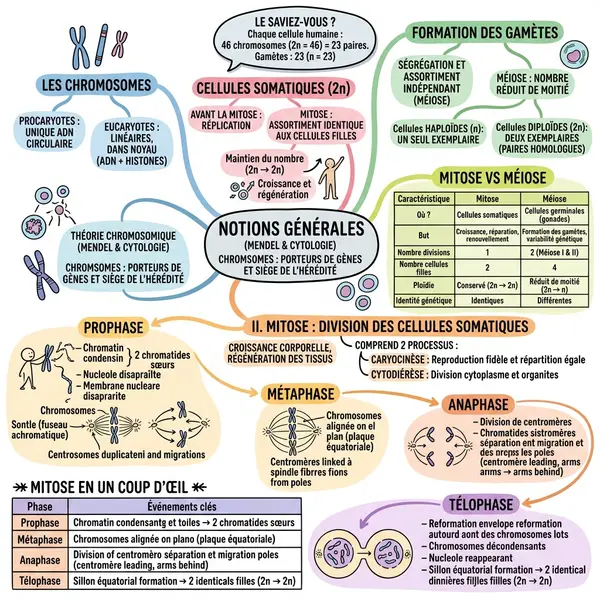
This is how we suggest using the sketchnote generator: it gives you step one in about 30 seconds, from text, a PDF or a photo of your notes, with flashcards and a quiz for step four. Steps two and three are yours, and they are the ones the research says you should not skip. An honest caveat: a visual you are handed is weaker than one you build. It earns its place by getting you to the building part faster.
Frequently asked questions
Do I need to be good at drawing?
No, but accuracy matters more than style. In the Schmeck study the correctness of the drawing predicted the test score; nobody measured how nice it looked. Boxes, arrows and labels are enough.
Is sketchnoting better than flashcards?
They do different jobs. Drawing helps you understand how ideas connect. Flashcards make you retrieve facts, which is what keeps them in memory. Use the visual first, then the cards.
Does looking at someone else's sketchnote help?
Somewhat. Text with graphics is understood better than text alone, by a moderate margin in meta-analyses. Making or redrawing the visual yourself helps more than viewing it.
Which subjects suit sketchnote revision?
Anything with structure: biology pathways, history timelines, legal tests, anatomy, system diagrams. It helps less for problem solving in maths, where practice problems do the work.