
In Frankenstein, Mary Shelley shows how ambition, creation and responsibility, and isolation shape both Victor Frankenstein and the creature. Their stories are linked: Victor’s choices bring the creature into the world, while the creature’s rejection and loneliness influence the choices he makes in response.
★What to remember
- Victor’s pursuit of knowledge becomes dangerous because he ignores its consequences and neglects other people.
- Victor abandons the creature after creating him, failing to provide care or guidance.
- The creature initially seeks kindness and companionship, but repeated rejection contributes to his anger and desire for revenge.
- The creature is responsible for his violent choices, although the novel shows how abandonment and rejection shape them.
- Victor’s isolation grows from secrecy, guilt, and his choices to withdraw from family and friends.
- The creature’s isolation is caused mainly by his lack of family and by people’s fear of his appearance.
- Victor and the creature mirror each other in their loneliness, but they do not have equal power or equal opportunities for connection.
- Ambition, failed responsibility, and isolation combine to drive the novel’s tragedy.
🎧Listen3:38 · transcript
AnnaWhen we talk about Frankenstein, it is tempting to focus on the creature’s violence. But the story asks us to look earlier, at Victor’s ambition and what he does after bringing the creature to life. Marco, is creating life itself Victor’s greatest failure?
MarcoNot by itself. His failure is that he abandons the creature as soon as he sees him. Victor has made a vulnerable being, but offers no guidance or protection. He wants the achievement, then refuses the responsibility that comes with it.
AnnaSo the ambition matters because it narrows his attention. He wants to discover the principles of life and do something extraordinary, but he stops thinking about what might follow. He neglects his health and the people around him, too.
MarcoRight. Shelley is not simply condemning scientific discovery. The danger is ambition without foresight and creation without care. And the creature’s story makes that question harder, because he begins by wanting something very different from revenge.
AnnaWhat does he want at first?
MarcoCompanionship, understanding, and a place among people. He learns language and customs by watching the De Lacey family in secret. He even tries to help them. But when they see him, they reject him. Other people respond to his appearance with fear or attack, without knowing his character.
AnnaThat rejection helps explain his anger, but it does not make his later violence acceptable. He murders William, Clerval, and Elizabeth. The novel asks us to consider how abandonment and rejection shaped him, while still judging him responsible for what he chooses to do.
MarcoExactly. We should avoid saying he is evil from birth, but we should also avoid saying Victor is responsible for every crime. Victor fails in his duty of care. The creature makes violent choices. Those are connected responsibilities, not identical ones.
AnnaIsolation connects them, too. Victor withdraws while pursuing his experiment, then keeps the truth secret. Later, fear and guilt make him even more solitary. Why does that secrecy matter?
MarcoBecause it keeps other people from understanding the danger or offering help. Victor has Elizabeth, Clerval, and his family, but he often fails to maintain those relationships. His isolation comes partly from events, and partly from choices he makes.
AnnaThe creature’s isolation is different. He begins without family, a name, or anyone to teach him how to live. Victor can turn away from relationships that exist. The creature is denied connection by nearly everyone he meets.
MarcoThat makes their loneliness similar, but unequal. Victor has power and opportunities for human connection. The creature begins dependent and powerless. Later, he gains the ability to threaten Victor, reversing the expected roles of creator and creation.
AnnaAnd once the creature seeks revenge, Victor becomes more guilty and cut off. The themes feed into one another: ambition leads to creation, abandonment deepens the creature’s isolation, and that isolation contributes to revenge.
MarcoYes, and the revenge deepens Victor’s separation, too. Shelley does not say suffering justifies every action. She asks us to weigh the creature’s responsibility for violence against Victor’s responsibility for abandoning him.
AnnaSo the tragedy grows from ambition without foresight, creation without care, and isolation allowed to deepen. The key is not to make Victor and the creature identical, or to treat either one as simple.
MarcoThat’s it. Their stories mirror each other, but their power, choices, and chances for connection are not the same.
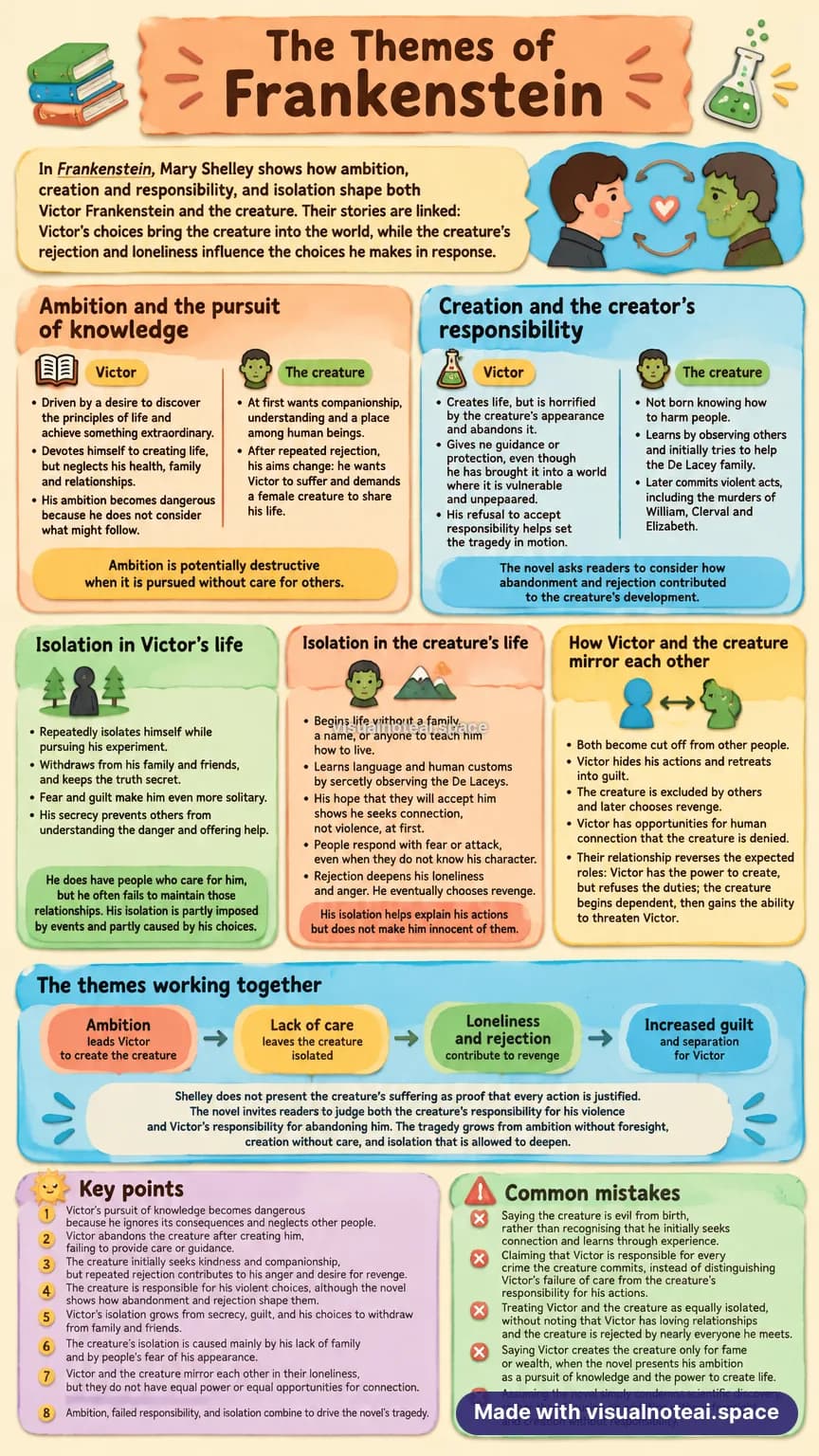
The whole topic on one page. Made with VisualNote.
!Common mistakes
- Saying the creature is evil from birth, rather than recognising that he initially seeks connection and learns through experience.
- Claiming that Victor is responsible for every crime the creature commits, instead of distinguishing Victor’s failure of care from the creature’s responsibility for his actions.
- Treating Victor and the creature as equally isolated, without noting that Victor has loving relationships and the creature is rejected by nearly everyone he meets.
- Saying Victor creates the creature only for fame or wealth, when the novel presents his ambition as a pursuit of knowledge and the power to create life.
- Assuming the novel simply condemns scientific discovery, rather than focusing on ambition without foresight and creation without responsibility.
🧠Explore the map32 ideas
The mind map VisualNote made for this topic. Drag to pan, scroll to zoom.
- Themes of Frankenstein
- Ambition and Knowledge
- Victor seeks knowledge and power to create life
- Neglects health, family, and relationships
- Creature first seeks companionship and understanding
- Rejection shifts his aims toward revenge
- Creation and Responsibility
- Victor abandons the creature after bringing him to life
- No guidance or protection for a vulnerable creation
- Creature learns through observation and experience
- Abandonment and rejection shape, but do not excuse, violence
- Victor's Isolation
- Withdraws from family and friends
- Secrecy hides danger and prevents help
- Guilt and fear deepen his solitude
- Has opportunities for connection with loved ones
- Creature's Isolation
- Begins without family, name, or guidance
- Learns language by observing the De Lacey family
- Seeks acceptance before turning to revenge
- Fear and attacks deepen loneliness and anger
- Victor and the Creature as Mirrors
- Both become cut off from others
- Victor withdraws; creature is excluded and later chooses revenge
- Unequal power and opportunities for connection
- Creator's neglected duties reverse expected roles
- Themes and Tragedy
- Ambition leads to creation without foresight
- Lack of care leaves the creature isolated
- Rejection and revenge increase Victor's guilt and separation
- Both Victor and creature bear responsibility for their choices
- Novel questions careless ambition, not discovery itself
- Ambition and Knowledge
🃏Flashcards12 cards
- What major themes shape Victor and the creature’s stories?
- Ambition, responsibility for creation, and isolation shape both characters. Their choices and experiences influence one another.
- What makes Victor’s ambition dangerous?
- He pursues the discovery of life and extraordinary achievement while neglecting his health and relationships, and without considering the consequences of his experiment.
- What does the creature initially want?
- He seeks companionship, understanding, and acceptance among human beings. Repeated rejection later turns his aims toward revenge.
- What is Victor’s main failure after creating the creature?
- Victor abandons the creature in horror and provides no guidance or protection, refusing responsibility for the vulnerable life he has created.
- How does the creature learn about human life?
- He secretly observes the De Lacey family and learns language and human customs. At first, he tries to help them and hopes they will accept him.
- How does the novel present the creature’s violence?
- The creature commits violent acts, including the murders of William, Clerval, and Elizabeth. His abandonment and rejection help explain his development but do not excuse his choices.
- What causes Victor’s isolation?
- He withdraws from loved ones during his experiment, keeps the truth secret, and later becomes more solitary through fear and guilt.
- What causes the creature’s isolation?
- He has no family or teacher, and people repeatedly fear or attack him because of his appearance. This rejection deepens his loneliness and anger.
- How are Victor and the creature alike in their isolation?
- Both become cut off from others: Victor retreats into secrecy and guilt, while the creature is excluded and later chooses revenge.
- Why are Victor and the creature not equally isolated?
- Victor has family and friends who care for him, even though he often neglects them. The creature is rejected by nearly everyone he meets and has far fewer opportunities for connection.
- How does the novel reverse the expected creator–creation relationship?
- Victor has the power to create life but refuses the duties that should follow. The creature begins powerless and dependent, then gains the ability to threaten Victor.
- How do the novel’s themes combine to drive the tragedy?
- Victor’s ambition leads to creation without care, leaving the creature isolated; rejection contributes to the creature’s revenge, which deepens Victor’s guilt and isolation. The novel asks readers to weigh both Victor’s failure of responsibility and the creature’s responsibility for violence.
✅Test yourself5 questions
Why does Victor’s pursuit of knowledge become dangerous?
Victor’s ambition becomes dangerous because he ignores possible consequences and neglects his health and relationships.
What is Victor’s central failure after the creature comes to life?
Victor abandons the vulnerable creature and refuses the responsibilities that follow from creating it.
How does the novel present the creature’s responsibility for his violence?
The novel links rejection to the creature’s anger while still presenting him as responsible for his acts.
What makes Victor and the creature’s isolation unequal?
Victor has family and friends, whereas the creature lacks a family and is repeatedly rejected because of his appearance.
Which sequence best shows how the novel’s themes combine to drive the tragedy?
Victor’s ambition leads to creation, his lack of care contributes to the creature’s isolation, and revenge deepens Victor’s guilt.
📝The notes
Ambition and the pursuit of knowledge
Victor is driven by a desire to discover the principles of life and achieve something extraordinary. He devotes himself to creating life, but becomes so focused on success that he neglects his health, family, and relationships. His ambition becomes dangerous because he does not properly consider what might follow from his experiment.
The creature also develops ambitions, though they are different from Victor’s. At first, he wants companionship, understanding, and a place among human beings. After repeated rejection, his aims change: he wants Victor to suffer and demands that Victor make a female creature to share his life. Shelley presents ambition as potentially destructive when it is pursued without care for others.
Creation and the creator’s responsibility
Victor’s great failure is not simply that he creates life. After the creature comes to life, Victor is horrified by its appearance and abandons it. He gives it no guidance or protection, even though he has brought it into a world where it is vulnerable and unprepared. His refusal to accept responsibility helps set the tragedy in motion.
The creature is not born knowing how to harm people. He learns by observing others and initially tries to help the De Lacey family, but they reject him when they see him. He later commits violent acts, including the murders of William, Clerval, and Elizabeth. The novel does not excuse these acts, but it asks readers to consider how Victor’s abandonment and human rejection contributed to the creature’s development.
Isolation in Victor’s life
Victor repeatedly isolates himself while pursuing his experiment. He withdraws from his family and friends, and he keeps the truth about the creature secret. Later, fear and guilt make him even more solitary. His secrecy prevents others from understanding the danger and offering help.
Victor does have people who care for him, including Elizabeth, Clerval, and his family, but he often fails to maintain those relationships. His isolation is partly imposed by events and partly caused by his own choices. Shelley connects his separation from others with his narrow focus on ambition and his refusal to share responsibility.
Isolation in the creature’s life
The creature begins life without a family, a name, or anyone to teach him how to live. He learns language and human customs by secretly observing the De Laceys. His hope that they will accept him shows that he seeks connection, not violence, at first.
People repeatedly respond to his appearance with fear or attack, even when they do not know his character. This rejection deepens his loneliness and anger. The creature eventually chooses revenge, so his isolation helps explain his actions but does not make him innocent of them.
How Victor and the creature mirror each other
Victor and the creature are very different in power and responsibility, but each becomes cut off from other people. Victor hides his actions and retreats into guilt. The creature is excluded by others and later chooses to separate himself through revenge. Their isolation is therefore both alike and unequal: Victor has opportunities for human connection that the creature is denied.
Their relationship also reverses the expected roles of creator and creation. Victor has the power to bring the creature to life, but he refuses the duties that should follow. The creature begins dependent and powerless, then gains the ability to threaten Victor. This reversal makes the novel’s questions about responsibility and sympathy more complex.
The themes working together
The themes are closely connected. Victor’s ambition leads him to create the creature, but his failure to care for what he has made leaves the creature isolated. The creature’s loneliness and rejection contribute to his revenge, which increases Victor’s guilt and separation from others.
Shelley does not present the creature’s suffering as proof that every action he takes is justified. Instead, the novel invites readers to judge both the creature’s responsibility for his violence and Victor’s responsibility for abandoning him. The tragedy grows from ambition without foresight, creation without care, and isolation that is allowed to deepen.
Make this for your own notes
Paste a chapter or a PDF and get the sheet, map, cards, quiz and episode back in about a minute. No credit card.